
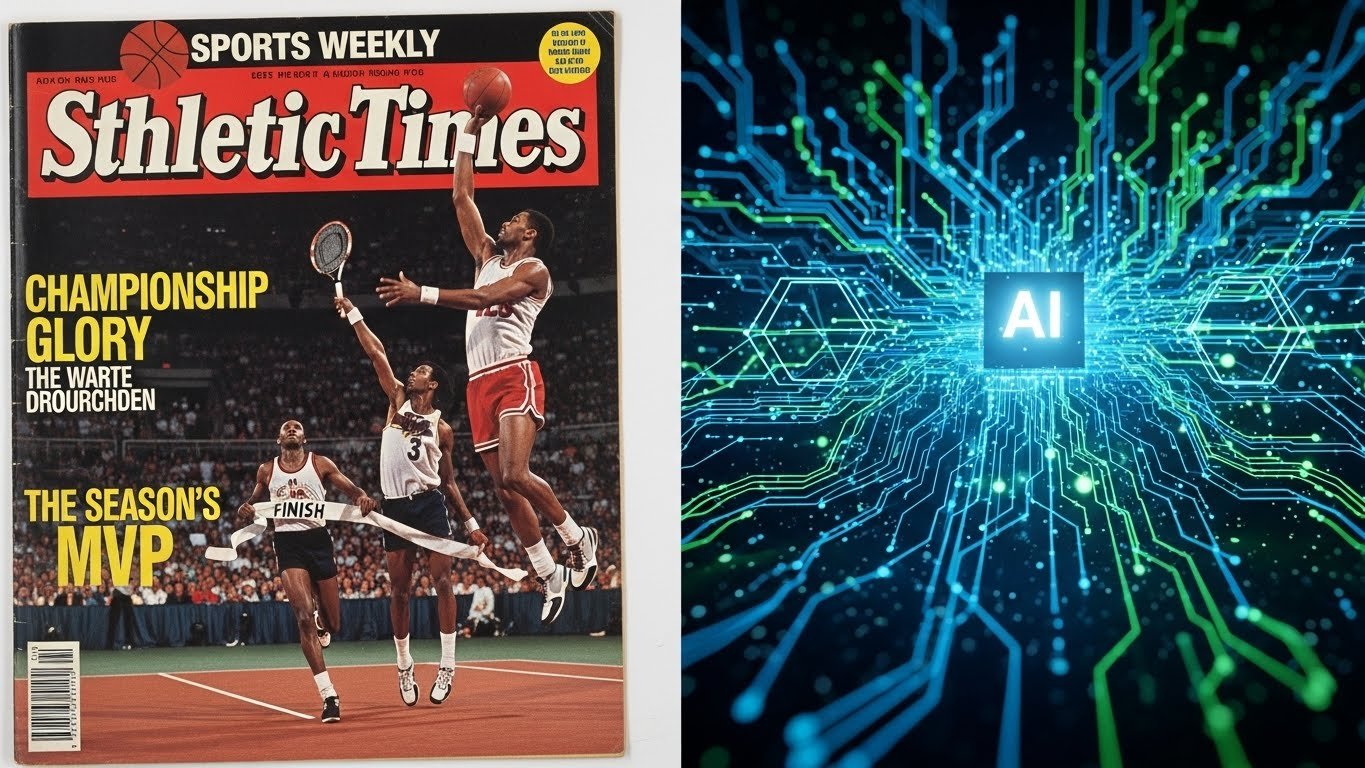
In late 2023, the name Sports Illustrated (SI) — once revered as a gold standard of sports journalism — faced a serious credibility crisis. Reports emerged that some SI articles were authored by people who didn’t exist. The bylines, photos and biographies appeared to be generated by artificial intelligence (AI). The fallout has triggered widespread outrage among journalists, readers and media-watchers.
This episode raises deep questions about ethics, trust, and the role of automation in journalism. Understanding what happened — and what to watch out for — matters not just for SI but for all media consumers in the age of AI.
What Is “Sports Illustrated AI”
“Sports Illustrated AI” refers to the controversy surrounding allegations that SI published content generated — in part or wholly — by AI, under fake author bylines and AI-generated headshots.
-
In November 2023, tech publication Futurism released an investigation claiming that SI had run articles attributed to authors who had no online presence beyond SI itself. Many of the author profile photos used were traceable to AI-headshot marketplaces.
-
Some of the “authors” had full bios filled with hobbies, backstories, and interests — for example, a profile for “Sora Tanaka,” described as a “fitness guru,” but with no evidence she existed outside the site.
-
The allegedly generated articles were not typical investigative sports stories, but rather product reviews and e-commerce content.
In short: “Sports Illustrated AI” is shorthand for the practice of using (allegedly) AI-generated content and fake author identities under a legacy-brand name.
How It Works
Here’s how the process reportedly worked — or at least, how it appeared to work.
-
A third-party firm (reported as AdVon Commerce) would supply content to SI under a licensing agreement.
-
That firm allegedly used AI (or at least AI-generated assets) to create “author” profiles — including portraits, names, and biographical blurbs.
-
Articles (primarily product reviews / buyer’s guides) would be published on SI’s site under those fictitious bylines.
-
When confronted by Futurism, SI’s publisher The Arena Group claimed the content came from AdVon and that all the pieces were “written and edited by humans.”
-
Nevertheless, SI removed the problematic content and ended its relationship with AdVon.
Because of conflicting statements — between what AdVon/SI claimed and what sources cited by Futurism reported — the full details remain murky.
Benefits (With Short Examples)
You might wonder: why would a publication risk this? There are a few perceived advantages — though, in this case, the risks clearly outweighed them.
-
Cost efficiency / Scalability: For routine content like product reviews or buying guides, generating content via AI or “content farms” is cheaper than hiring experienced journalists. This allows a site to produce high volumes of content fast.
-
Example: Instead of commissioning a staff writer or freelance reporter to review 10 different volleyballs, a third-party content provider could spin up several review articles with minimal human input (or AI-assisted drafting), reducing time and payroll costs.
-
-
Speed and volume / SEO-driven traffic: E-commerce and review content can attract clicks, ad revenue, or affiliate earnings. More content → more pages indexed → potentially more ad impressions.
-
Flexibility in staffing / anonymity: Using pseudonyms or anonymous bylines can offer flexibility and avoid the overhead of managing many freelance writers, especially if the site wants to remain “lean.”
In a lean, digital-first business model, these efficiencies might seem attractive — particularly when traditional journalism budgets are under pressure.
Problems / Risks
But as the “Sports Illustrated AI” scandal shows, the downsides are serious — especially when transparency, ethics, and brand reputation are at stake.
✅ Erosion of trust and credibility
Readers expect bylines to correspond to real people who stand behind the content. Using fake author profiles and AI-generated headshots breaches that trust. Once exposed, it damages the brand’s integrity.
✅ Undermining of journalistic ethics
Members of SI’s own staff and the union condemned the practice. Integrity, accountability, and transparency are core to journalism — fake bylines violate them.
✅ Lack of accountability / quality control
If content is generated (or partially generated) by AI or anonymous third parties, mistakes, biases, or misinformation may creep in — and it becomes harder to hold anyone responsible.
✅ Reputation damage & brand dilution
For a legacy publication with decades of history, such a scandal undermines its standing. What was once a respected name becomes associated with “clickbait” or “content-farm” style writing.
✅ Legal / ethical risks (e.g. misleading readers, undisclosed sponsorships/affiliations)
Especially when content is essentially product reviews — readers may assume editorial integrity, not commercial intent. If it’s essentially affiliate-driven marketing disguised as journalism, that raises disclosure and consumer-protection issues.
How to Use / Step-by-Step Guide (For Media Outlets Considering AI Content) — With Caution
If a media outlet is considering using AI or third-party content, here’s a responsible way to do it — balancing efficiency with ethics.
-
Full transparency — clearly disclose when content is AI-generated or produced by third-party contributors. Don’t hide behind anonymous bylines.
-
Human review and editing — ensure real journalists or editors vet, fact-check, and approve any AI-assisted content.
-
Clear labeling — mark articles as “Sponsored Content,” “Affiliate Review,” or “Third-Party Content” when applicable. Avoid mixing with core journalism.
-
Maintain standards — treat product reviews with the same editorial integrity as regular articles: check accuracy, avoid misleading claims, and disclose affiliations.
-
Limit the scope — restrict AI/third-party content to clearly-marked segments (e.g. affiliate guides), not core reporting or investigative journalism.
-
Regular audits — periodically review third-party content for compliance with journalistic standards; remove or correct content if needed.
Used properly, AI can assist with routine or repetitive tasks — but human oversight and transparency are critical.
Real-Life Example
Here’s a concrete scenario:
Imagine a sports fan searches online for “best volleyball for beginners 2024” and lands on a page published under SI brand. The byline reads “Drew Ortiz,” with a friendly profile photo and bio. The article recommends several volleyballs, with affiliate links to retailers. The fan takes these recommendations at face value, trusts SI’s brand history, clicks through, and maybe buys a ball.
Unbeknownst to them: the author doesn’t exist. The photo is AI-generated, the biography made up, and the content assembled by a third-party content farm using AI or template-based copywriting.
When the scandal comes out, that reader might feel misled, their trust in SI shaken — and SI’s long-standing reputation for credibility and quality damaged.
This is exactly the kind of scenario described in the 2023 investigation into SI’s AI content practices.
Comparison Table
| Aspect | Traditional Journalism (Real Reporters) | “AI / Third-Party Content” Model (as in SI case) |
|---|---|---|
| Author identity | Real person with verifiable background | Pseudonym / fake profile, possibly AI-generated |
| Transparency | Byline reveals actual journalist / contributor | Often anonymous or hidden; no disclosure of AI |
| Accountability | Writer / editor responsible for accuracy | Hard to trace who produced content; no accountability |
| Editorial standards | High: fact-checking, ethics, source verification | Often minimal, especially for affiliate-driven content |
| Reader trust | Built over time, based on reputation and quality | Easily eroded if deception uncovered |
| Cost / speed | Slower, more expensive | Fast, cheaper, scalable |
Conclusion
The “Sports Illustrated AI” scandal underscores a vital lesson: trust and transparency are the backbone of journalism. When a legacy brand publishes content under fake names and possibly uses AI to generate text and imagery — without clear disclosure — it betrays that trust.
While AI and automation can help with certain content tasks, using them without transparency undercuts journalistic values. The SI episode serves as a cautionary tale: shortcuts for cost or volume may offer short-term benefits but can inflict long-lasting damage to credibility.
For readers: always check authorship and be skeptical if a site mixes product reviews, bylines from unfamiliar names, and no clear disclosure. For publishers: if you adopt AI in content creation — do it ethically, transparently, and with human oversight.
FAQs
Q1: Did Sports Illustrated admit using AI-generated articles?
They denied that the content was AI-written, stating that the disputed pieces were from a third-party (AdVon Commerce) and were “written and edited by humans.”
Q2: What kind of articles were affected?
Primarily product reviews, buyer’s guides — e-commerce-style content, not investigative sports journalism.
Q3: Were the fake author photos really from AI?
Yes — in at least some cases the profile images were traceable to AI-generated headshot marketplaces.
Q4: What was the reaction inside SI?
Journalistic staff — including members of the SI Union — condemned the practice, calling it a betrayal of trust and demanding transparency.
Q5: Did SI remove the content?
Yes — after the allegations surfaced, SI removed the questioned articles and ended its partnership with AdVon Commerce.
Q6: Is this practice common elsewhere?
According to reporting, other media companies have explored using AI for content generation, especially for repetitive or e-commerce content. But the SI case stands out because of the use of fake bylines and lack of disclosure.
Q7: Does this mean all SI content is untrustworthy now?
Not necessarily. The controversy mainly involves certain product-review articles tied to third-party content. SI still has staff writers and produces genuine reporting. But the breach of trust has damaged its reputation — meaning readers should check authorship and be more critical.







Leave a Reply