
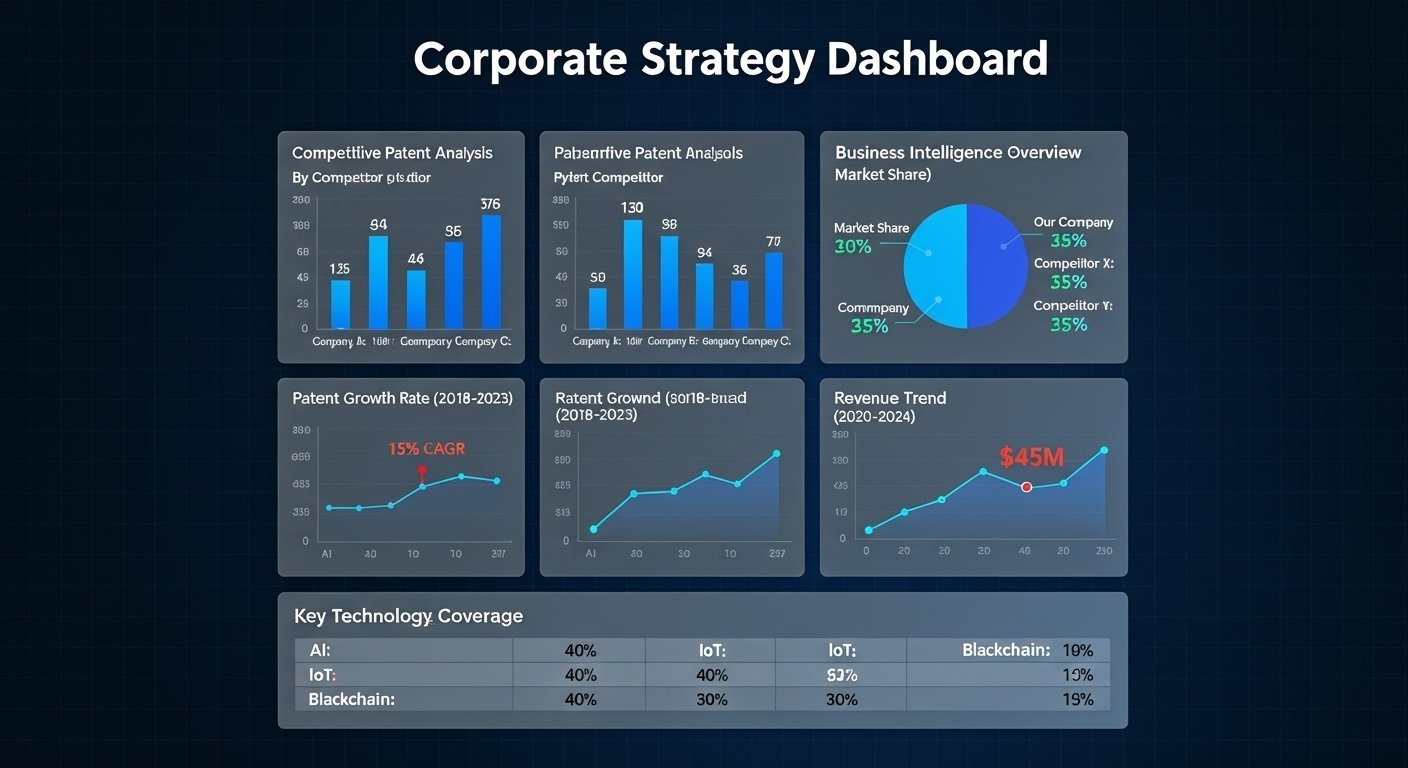
In today’s rapidly evolving technological landscape, understanding patent ecosystems and innovation patterns has become crucial for businesses seeking competitive advantages. InnoVAE: generative AI for mapping patents and firm innovation represents a groundbreaking approach that transforms how organizations analyze, visualize, and leverage patent data to drive strategic decision-making.
The challenge of extracting meaningful insights from vast amounts of unstructured patent text has long plagued researchers and business strategists. Traditional methods often fall short in providing actionable intelligence that can guide innovation strategies and competitive positioning. This is where InnoVAE emerges as a game-changing solution, offering unprecedented capabilities in patent analysis and innovation mapping.
What is InnoVAE: Generative AI for Mapping Patents and Firm Innovation?
InnoVAE stands for Innovation Variational AutoEncoder, a sophisticated generative AI system developed by leading researchers including Dokyun Lee from Boston University, Zhaoqi Cheng, and Prasanna Tambe from Wharton School. This innovative technology represents a significant leap forward in how we understand and visualize innovation ecosystems.
At its core, InnoVAE employs advanced machine learning techniques to convert unstructured patent text into interpretable, spatial representations within what researchers call “Innovation Space”. This revolutionary approach enables organizations to:
-
Visualize complex patent landscapes in intuitive formats
-
Identify innovation gaps and opportunities
-
Track competitive movements over time
-
Make data-driven strategic decisions
The system’s foundation lies in Variational AutoEncoder technology, which learns vector representations of patents and places them within a disentangled space designed to facilitate managerial intuition and strategic planning.
How InnoVAE Works: The Technology Behind Innovation Mapping
The generative AI for mapping patents and firm innovation operates through a sophisticated multi-step process that transforms raw patent data into actionable business intelligence.
The Innovation Space Framework
InnoVAE creates what researchers term “Innovation Space” – a multi-dimensional representation where patents are positioned based on their technological characteristics and relationships. This space enables various analytical capabilities:
-
Semantic Understanding: The AI system analyzes patent text to understand the underlying technological concepts and innovations
-
Dimensional Reduction: Complex patent information is compressed into manageable, interpretable dimensions
-
Spatial Mapping: Patents are positioned within the Innovation Space based on their technological similarities and differences
-
Pattern Recognition: The system identifies trends, clusters, and relationships that might not be apparent through traditional analysis
Machine Learning Architecture
The Variational AutoEncoder architecture at the heart of InnoVAE consists of:
-
Encoder Network: Processes raw patent text and converts it into latent representations
-
Decoder Network: Reconstructs patent information from the latent space
-
Regularization Mechanisms: Ensure the learned representations are meaningful and interpretable
This architecture enables the system to learn rich, nuanced representations of patent content that capture both explicit and implicit technological relationships.
Key Applications and Use Cases of InnoVAE
Technology Landscapes and Competitive Positioning
One of the most powerful applications of InnoVAE: generative AI for mapping patents and firm innovation lies in creating comprehensive technology landscapes. These visual representations help organizations understand:
-
Market Position: Where a company stands relative to competitors in specific technological domains
-
White Space Identification: Areas with limited patent activity that represent potential opportunities
-
Competitive Clustering: How competitors group around different technological approaches
-
Innovation Trajectories: The direction and speed of technological development in various fields
For example, a pharmaceutical company can use InnoVAE to map the entire landscape of drug discovery patents, identifying where major competitors are focusing their efforts and where unexplored opportunities might exist.
Feature Engineering for Patent Analysis
Traditional patent analysis often struggles with the unstructured nature of patent text. InnoVAE addresses this challenge by creating intuitive features from complex patent documents. These engineered features enable:
-
Automated Patent Classification: Grouping patents into meaningful categories without manual intervention
-
Similarity Scoring: Quantifying how closely related different patents are to each other
-
Trend Analysis: Identifying emerging technological themes and their evolution over time
-
Risk Assessment: Evaluating potential patent conflicts and infringement risks
Patent Application Enhancement
Perhaps one of the most practical applications involves using InnoVAE to improve patent applications and reduce rejection risks. The system can:
-
Analyze successful patents in similar technological areas
-
Identify key terminology and claim structures that increase approval likelihood
-
Suggest modifications to patent language for better clarity and defensibility
-
Predict potential examiner objections based on historical patterns
Innovation Space Technology: Beyond Traditional Patent Analysis
The Innovation Space created by generative AI for mapping patents and firm innovation extends far beyond simple patent mapping. This multidimensional framework enables organizations to explore strategic questions such as:
Company Ranking and Technological Leadership
InnoVAE can rank companies based on various technological factors, providing insights into:
-
Innovation Intensity: How actively a company patents in specific areas
-
Technological Breadth: The diversity of a company’s innovation portfolio
-
Innovation Quality: The impact and citation patterns of a company’s patents
-
Emerging Technology Adoption: How quickly companies embrace new technological paradigms
Dynamic Innovation Analysis
The system’s ability to track changes over time provides valuable insights into:
-
Innovation Velocity: How quickly companies are developing new technologies
-
Strategic Shifts: Changes in corporate innovation focus and priorities
-
Market Dynamics: Evolution of competitive landscapes and technological convergence
-
Opportunity Windows: Timing for entering specific technological markets
Cross-Industry Innovation Patterns
InnoVAE’s flexibility allows it to process various business objects beyond patents, including jobs, firms, and products. This capability enables:
-
Technology Transfer Analysis: Understanding how innovations move between industries
-
Talent Flow Mapping: Tracking how skilled professionals move between organizations
-
Supply Chain Innovation: Analyzing innovation patterns across value chains
-
Ecosystem Evolution: Understanding how innovation networks develop and change
Real-World Applications and Industry Impact
Corporate Strategy and Planning
Major corporations are increasingly leveraging InnoVAE: generative AI for mapping patents and firm innovation for strategic planning initiatives. The technology helps organizations:
-
Portfolio Optimization: Identifying redundant research efforts and consolidating innovation initiatives
-
Acquisition Targeting: Finding companies with complementary technological capabilities
-
Research Direction: Guiding R&D investments toward high-impact opportunities
-
Competitive Intelligence: Monitoring competitor innovation strategies and patent activities
Intellectual Property Management
Law firms and IP professionals are finding significant value in InnoVAE’s capabilities. Applications include:
-
Prior Art Search: More efficient identification of relevant prior art for patent prosecution
-
Freedom to Operate Analysis: Comprehensive landscape analysis for new product development
-
Patent Valuation: Data-driven approaches to assessing patent portfolio value
-
Litigation Support: Enhanced analysis for patent disputes and infringement cases
Government Policy and Innovation
Government agencies and policy advisors are using the technology to :
-
Innovation Policy Development: Understanding national and regional innovation strengths and weaknesses
-
Technology Foresighting: Identifying emerging technologies that may require regulatory attention
-
Economic Development: Targeting innovation incentives and support programs
-
International Competitiveness: Benchmarking national innovation performance against global leaders
Commercial Platform: Innovae for Patent Intelligence
Beyond the academic research, there’s a commercial platform called Innovae (without the V) that applies similar generative AI principles for practical patent intelligence. This platform offers:
Advanced Analytics Features
-
Semantic Clustering: Automatically grouping related patents based on technological similarity
-
Real-time Innovation Heatmaps: Visual representations of active innovation areas
-
Competitor Overlap Mapping: Detailed analysis of competitive patent landscapes
-
Trend Prediction: AI-powered forecasting of technological development directions
User-Friendly Interface
The commercial platform democratizes access to sophisticated patent analysis through:
-
Interactive Dashboards: Easy-to-use interfaces for non-technical users
-
Customizable Visualizations: Tailored representations based on specific business needs
-
Automated Reporting: Regular updates on competitive landscapes and innovation trends
-
Integration Capabilities: Seamless connection with existing business intelligence systems
Benefits for Different Industries
Technology Sector
Technology companies benefit from generative AI for mapping patents and firm innovation through:
-
Faster Innovation Cycles: Reduced time from idea to patent application
-
Strategic Patent Filing: More informed decisions about which innovations to patent
-
Competitive Monitoring: Real-time tracking of competitor patent activities
-
Technology Roadmapping: Data-driven planning for future product development
Pharmaceutical and Biotechnology
Healthcare industries leverage InnoVAE for:
-
Drug Discovery Optimization: Identifying promising research directions and avoiding crowded areas
-
Regulatory Strategy: Understanding patent landscapes that may affect regulatory approval timelines
-
Partnership Identification: Finding potential collaboration partners with complementary technologies
-
Risk Management: Assessing patent freedom-to-operate for new therapeutic approaches
Manufacturing and Engineering
Traditional manufacturing industries use the technology for:
-
Process Innovation: Identifying opportunities for manufacturing process improvements
-
Material Science Advancement: Understanding developments in new materials and applications
-
Automation Technologies: Tracking the evolution of industrial automation and robotics
-
Sustainability Innovation: Monitoring environmental technology developments and opportunities
The Future of AI in Patent Analysis
As InnoVAE: generative AI for mapping patents and firm innovation continues to evolve, several trends are shaping its future development:
Enhanced Natural Language Processing
Future versions will likely incorporate more advanced language models, enabling:
-
Multilingual Patent Analysis: Support for patents filed in different languages and jurisdictions
-
Contextual Understanding: Better comprehension of technical nuance and domain-specific terminology
-
Cross-Domain Translation: Ability to identify similar innovations across different technological fields
-
Real-time Processing: Instant analysis of newly filed patents and patent applications
Integration with Emerging Technologies
The technology is expected to integrate with other cutting-edge innovations:
-
Blockchain for IP Protection: Secure, immutable records of innovation development and ownership
-
IoT for Innovation Monitoring: Real-time tracking of innovation implementation and performance
-
Quantum Computing: Enhanced processing capabilities for analyzing massive patent datasets
-
Augmented Reality: Immersive visualization of patent landscapes and innovation ecosystems
Conclusion
InnoVAE: generative AI for mapping patents and firm innovation represents a transformative advancement in how organizations understand and navigate complex innovation landscapes. By converting unstructured patent text into actionable business intelligence, this technology empowers companies to make more informed strategic decisions, identify untapped opportunities, and maintain competitive advantages in rapidly evolving markets.
The system’s ability to create interpretable Innovation Spaces, combined with its applications in technology landscape mapping, feature engineering, and patent application enhancement, makes it an invaluable tool for modern businesses. As the technology continues to mature and integrate with other emerging innovations, its impact on innovation management and strategic planning will only grow more significant.
For organizations serious about leveraging data-driven insights for innovation strategy, InnoVAE offers a compelling solution that bridges the gap between complex patent data and actionable business intelligence. The future of innovation management lies in tools like these that can transform vast amounts of unstructured information into clear, strategic guidance for business success.
FAQs
Q1: What makes InnoVAE different from traditional patent search tools?
A: Unlike traditional keyword-based patent search tools, InnoVAE uses generative AI to understand the semantic meaning and technological relationships within patent documents. It creates spatial representations that reveal patterns and connections that might not be apparent through conventional search methods.
Q2: How accurate is InnoVAE in predicting innovation trends?
A: InnoVAE’s accuracy depends on the quality and comprehensiveness of the patent data it analyzes. The system excels at identifying existing patterns and relationships, but like all AI systems, its predictive capabilities are based on historical data and should be used in conjunction with expert judgment and market analysis.
Q3: Can small companies benefit from InnoVAE technology?
A: Yes, the commercial Innovae platform is designed to serve organizations of various sizes, including smaller companies that may not have extensive patent analysis resources. The platform provides user-friendly interfaces and automated features that make sophisticated patent analysis accessible to non-technical users.
Q4: What types of patents can InnoVAE analyze?
A: InnoVAE can analyze patents across virtually any technological domain. The system’s machine learning architecture is designed to adapt to different technical vocabularies and innovation patterns, making it suitable for everything from software patents to biotechnology and mechanical engineering innovations.
Q5: How does InnoVAE ensure data privacy and security?
A: While specific security measures may vary by implementation, responsible AI systems like InnoVAE typically incorporate standard data protection practices, including encryption, access controls, and compliance with relevant data privacy regulations. Organizations should verify specific security features with their chosen platform provider.







Leave a Reply