
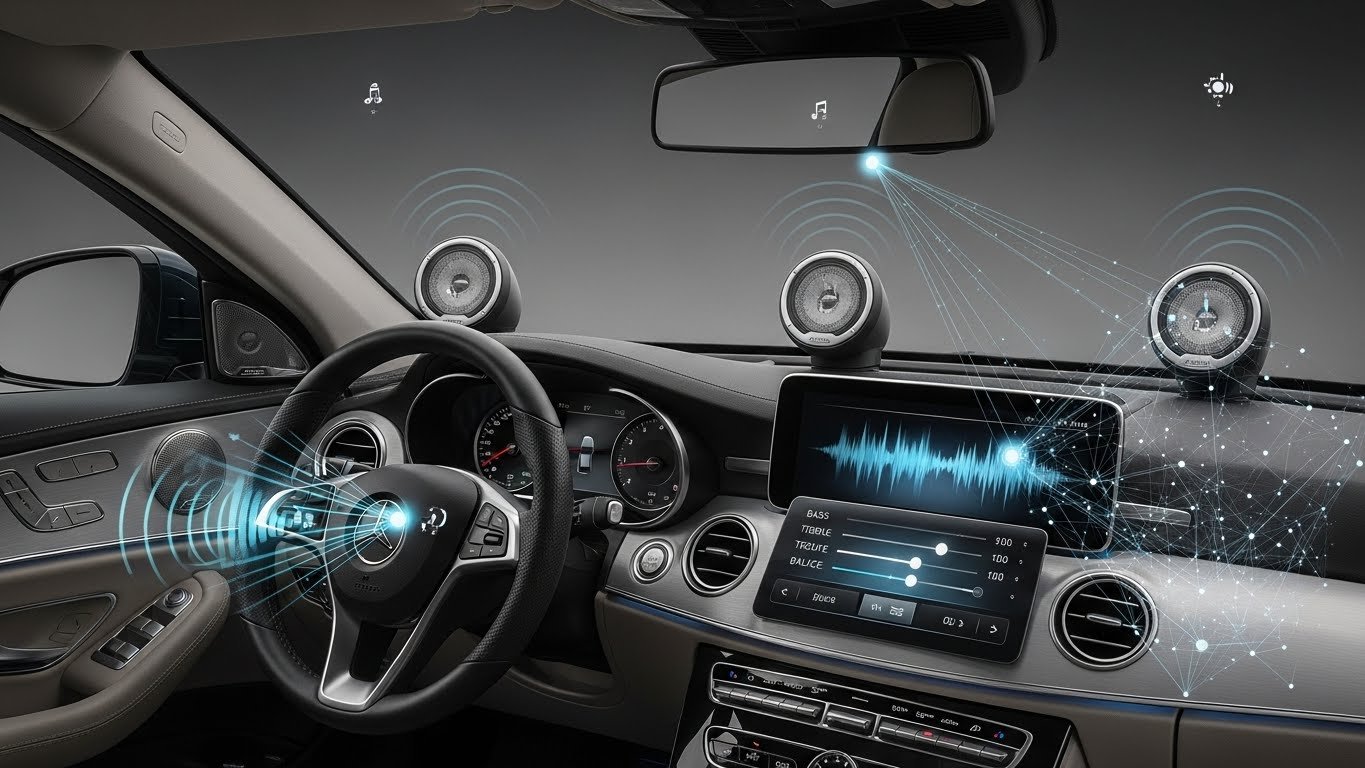
The integration of Artificial Intelligence (AI) in automotive technology has revolutionized many aspects of our driving experience, from autonomous vehicles to voice-controlled systems. One area that has seen significant improvement thanks to AI is car audio tuning. Gone are the days when drivers had to manually adjust their car’s sound system to get the perfect audio quality. With AI-powered car audio tuning, the system can automatically optimize itself, providing a customized, immersive listening experience that adapts to both the vehicle’s environment and the listener’s preferences.
What Is AI Car Audio Tuning?
AI car audio tuning refers to the use of artificial intelligence to dynamically adjust the sound system in your vehicle. This AI-driven system analyzes various parameters like the car’s acoustics, the listener’s preferences, the type of music being played, and even external factors such as road noise and speed. It then automatically fine-tunes the sound output to deliver optimal audio quality. The goal is to create a seamless, personalized listening experience that enhances the audio without requiring manual intervention from the driver.
How It Works
AI car audio tuning works through a combination of sensors, algorithms, and machine learning. Here’s a breakdown of the process:
-
Sound Analysis: The AI system analyzes the vehicle’s interior acoustics. It looks at factors such as the size and shape of the car, the materials used in the interior, and how sound travels within the cabin.
-
Real-time Adjustments: Once the system understands the acoustics of the car, it uses real-time data to make adjustments. For example, it can adapt to changes in speed, road conditions, or the type of audio content being played.
-
Personalization: Over time, the AI learns the driver’s preferences, such as favored sound profiles (bass, treble, etc.), and tailors the sound to match these tastes.
-
Continuous Learning: The system continuously adjusts to changes in the car’s environment, ensuring that the sound remains optimal even as road conditions or settings evolve.
This process involves complex machine learning algorithms, often leveraging DSP (digital signal processing) to manipulate audio signals. Some advanced systems even use microphones placed around the vehicle to monitor the interior sound levels and make adjustments on the fly.
Benefits of AI Car Audio Tuning (With Short Examples)
AI car audio tuning provides numerous benefits, from enhancing sound quality to offering a fully personalized experience. Let’s take a look at some of the key advantages:
1. Personalized Sound Experience
One of the biggest benefits of AI car audio tuning is that it creates a personalized sound profile based on individual preferences. For example, if you love deep bass for hip-hop or a balanced sound for classical music, the AI system can adjust to suit your specific needs. It learns your listening habits and adjusts the audio settings accordingly.
2. Improved Sound Quality
AI can make real-time adjustments based on the car’s acoustics and environment, ensuring that the audio quality is consistently top-notch. This includes fine-tuning bass, midrange, and treble, providing a more immersive listening experience.
3. Noise Reduction
AI car audio systems can actively reduce road noise or cabin hum, improving the clarity of your music or podcast. If you’re driving on a rough road, the system can enhance midrange frequencies to compensate for lost clarity.
4. Hands-Free Convenience
With AI, there’s no need for manual adjustments every time you change the genre or drive in different conditions. The system does it all for you, offering a hands-free experience and allowing you to focus on driving.
Example: Imagine you’re driving down a highway with the windows open. The AI system detects the increased wind noise and adjusts the audio to compensate, ensuring the sound remains clear without needing you to adjust any settings.
Problems / Risks
While AI car audio tuning offers significant advantages, there are some challenges and risks that come with it:
1. Initial Setup Complexity
The initial setup for AI tuning systems can be complex, as the system needs to learn and adjust to the specific acoustics of the car. This could take some time, especially in a car with non-standard audio setups.
2. Over-Reliance on Automation
Some drivers may feel uncomfortable with the level of automation involved. For example, the AI may make adjustments that you don’t prefer, and since there’s no manual override in some systems, you may feel restricted in terms of control.
3. Cost
High-end AI car audio systems can be expensive, especially when installed in luxury vehicles. The cost of installation and the need for ongoing updates could make these systems less accessible to the average consumer.
How to Use AI Car Audio Tuning: Step-by-Step Guide
If you’ve just installed an AI-powered car audio system, here’s a simple guide on how to get the most out of it:
Step 1: Allow the System to Learn
When you first use the system, let it learn about your driving environment. Play various types of music and drive under different conditions to allow the AI to adjust to the cabin’s acoustics.
Step 2: Adjust Preferences
Customize your listening preferences. AI systems often allow you to adjust bass, treble, and other sound settings to suit your tastes. Over time, the system will fine-tune itself to match these preferences automatically.
Step 3: Engage Personalization Mode
Many systems allow you to engage a “personalization mode” where the AI will store your settings and adjust the sound based on your listening habits. Use this feature to ensure that the system tunes itself according to your specific needs.
Step 4: Monitor the Adjustments
As you drive, take note of any automatic adjustments the system makes. If it works well, you’re good to go. If not, consider fine-tuning the settings through the vehicle’s interface.
Real-Life Example
One real-life example of AI car audio tuning can be seen in luxury vehicles like the Mercedes-Benz S-Class, which uses advanced sound system technology to personalize the audio experience. The system automatically adjusts the audio to account for road noise, seat position, and even the type of music being played, creating a bespoke sound experience for every ride.
Another example is the AI-driven sound system in certain Audi models, where the car’s interior microphones track sound levels and adjust the bass, treble, and other audio elements to suit the driver’s preferences and the vehicle’s acoustics.
Comparison Table: AI Car Audio Tuning vs Traditional Car Audio Systems
| Feature | AI Car Audio Tuning | Traditional Car Audio System |
|---|---|---|
| Personalization | Fully personalized based on preferences | Manual adjustments by user |
| Sound Optimization | Real-time adjustments based on acoustics and conditions | Static sound settings |
| Noise Cancellation | Active noise compensation | No noise cancellation |
| Ease of Use | Hands-free, automatic adjustments | Requires manual intervention |
| Cost | Higher, often found in luxury cars | Lower, available in all price ranges |
Conclusion
AI car audio tuning is transforming the way we experience music and sound in our vehicles. With its ability to provide a personalized, optimized listening experience that adapts to the car’s acoustics and the driver’s preferences, it’s an innovation that offers convenience and high-quality sound. Though there are challenges, such as initial setup complexity and higher costs, the benefits far outweigh the drawbacks for those who seek a premium audio experience in their cars.
As AI technology continues to advance, we can expect even more sophisticated audio systems that push the boundaries of what’s possible in car entertainment. Whether you’re driving for leisure or on a long road trip, AI car audio tuning ensures that your in-car sound experience is always top-notch.
FAQs
1. Is AI car audio tuning available in all vehicles?
AI car audio tuning is typically available in high-end or luxury vehicles, though some aftermarket systems are beginning to offer this feature.
2. How does AI car audio tuning adjust to road conditions?
The system uses sensors to detect changes in speed, road texture, and external noise, adjusting the sound output accordingly to ensure a clear listening experience.
3. Can I override the AI audio adjustments?
Some systems allow manual overrides for specific sound settings, though many are fully automated.
4. Does AI car audio tuning work with all types of music?
Yes, the system adapts to different genres by adjusting the sound profile (bass, treble, etc.) to suit the audio characteristics of the music being played.
5. How long does it take for the AI to learn my preferences?
Typically, it takes a few hours of driving for the system to fully learn your preferences, though some systems may take longer for optimal tuning.






Leave a Reply